Moksa can be attained only after death. How do you then say that it can be attained during one's lifetime?
Umasvati says: "Moksha lies just before you. It can be attained at this very moment by those whose conduct has become pure." It means self-experience or knowledge of the pure self which can be attained by a complete detachment from worldly considerations or through complete freedom from passions. We should try to understand every thing from the relativist point of view. Take, for example, an earthen pot. We say that it has come into existence only after it has been removed from the potter's kiln. Did it not come into existence when the potter had prepared the clay lump? Did it not come into existence when the potter had placed the lump of clay on the wheel? Mahavira said that an action has been completed as soon as it has begun. In fact, the pot comes into existence as soon as the potter has conceived it. Moksha too is not an end product. It becomes attained during those moments when we have begun attempts to attain it in right earnest and not after we have died. Those who think that it can be attained only after death will never attain it. A child who does not die at the moment of its birth will never die. Generally we declare that someone has died only when the end moment of life has arrived. This smacks of sheer ignorance. This applies to Moksha also. Generally we say that Nirjara or the stopping of fresh Karma begins at the moment when the shackles of action have been cut. Does not the state of emancipation begin at the moment of the beginning of Nirjara? It does. The time factor is only a convenient device for thinking. We should understand this point clearly.You have stated that one can experience Moksha at the present moment or just now. How is it possible?Generally we think that Moksha is an objective outside us. This is wrong. Moksha is a part and parcel of our very being. It is the real state of our being. It is the state of detachment. It develops within us. It is self-experience.

 Pankaj Dudhoria
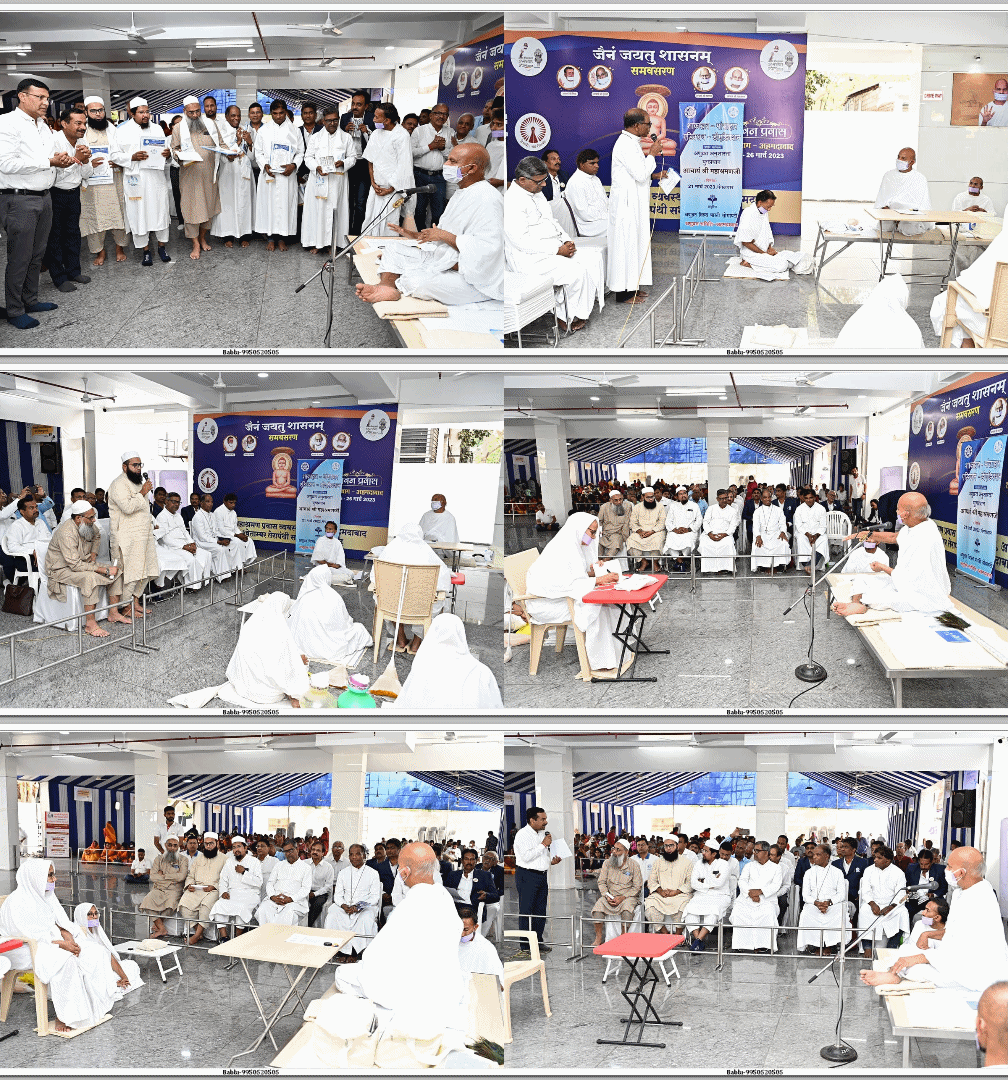
शाकाहार एवं नशामुक्ति विषय पर अणुव्रत अनुशास्ता के सान्निध्य में सर्वधर्म संगोष्ठी
अहमदाबाद। अणुव्रत विश्व भारती सोसायटी के तत्त्वावधान में अणुव्रत समिति, अहमदाबाद की ओ…